
Us vs. Goliath (Part 1 of 2)
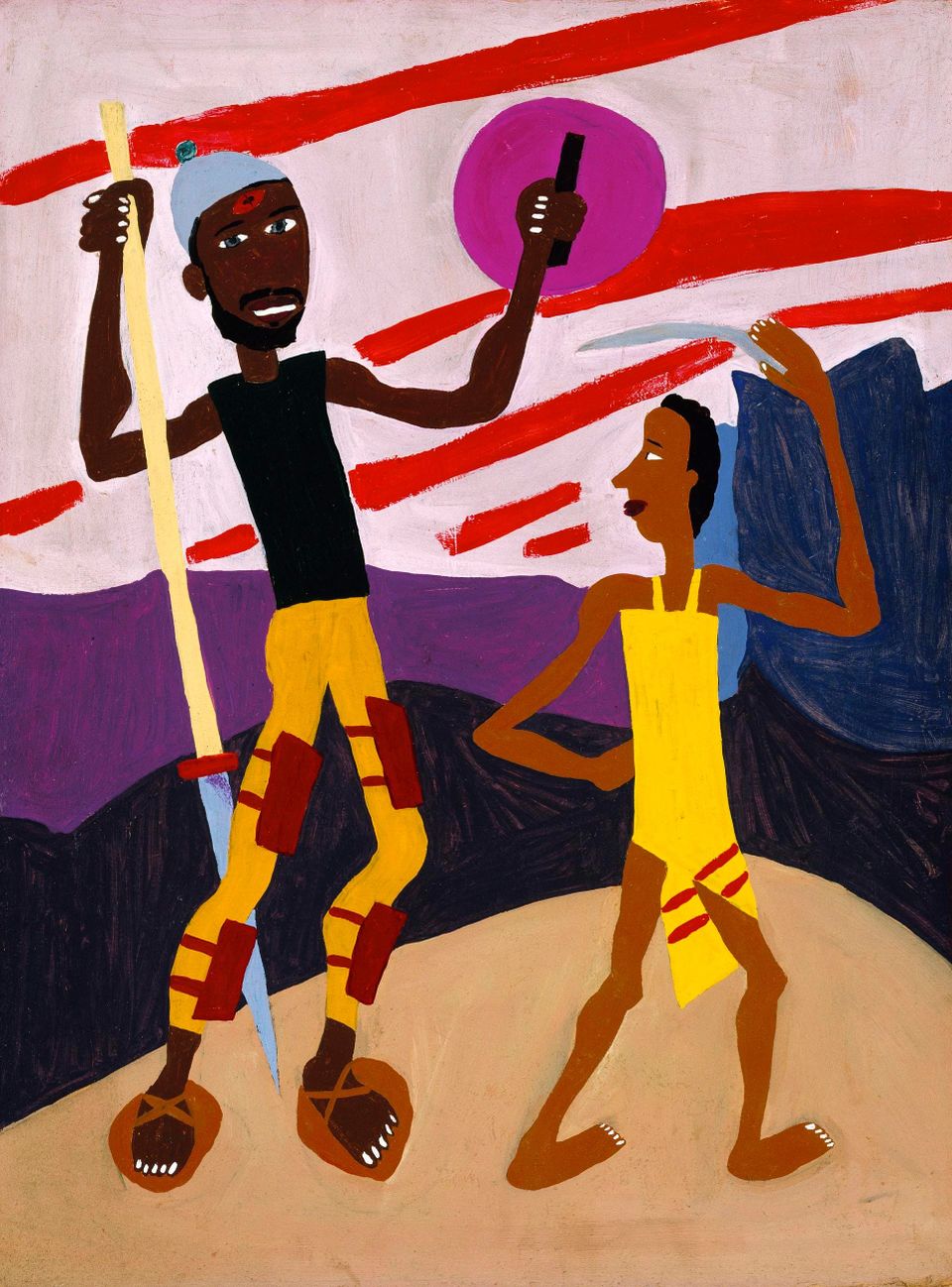
In 2013, Malcolm Gladwell published David and Goliath, arguing that we’ve been misreading the world’s most famous underdog story. His case is simple and unsettling: seeming disadvantages can be hidden strengths, and perceived strengths can often be weaknesses. “Giants are not what we think they are,” he writes.
What we picture as a shepherd boy with a toy was actually a deadly marksman harnessing the stopping power of a handgun. Goliath’s terrifying size and heavy armor were geared for entirely the wrong type of combat, and he never stood a chance. David’s disadvantage was very real: he was small, overlooked, outcast, untrained, and untested. But years alone spent in the margins had honed skills that the army disregarded, that actually gave David the unfair advantage. That’s worth holding on to, because the giant we’re about to describe is very big. So let’s size him up.
Every year, a quarter million churches around the world pay a licensing company for the right to put worship lyrics on a screen. Each time a church reports singing a song, a little money trickles up the chain to whoever owns it. Multiply every song by every church service (now with livestream) by every Sunday, and you get one of the steadiest income streams in all of music. A top worship song can earn a million dollars a year. Compared to secular hits that fade quickly, worship songs keep earning for longer as they are played on repeat for years and years. In 2025, Christian and gospel streams in America grew 18.5%, much faster than rock or Latin. Wall Street has noticed. Investment funds, including one backed by Blackstone, have been buying up the catalogs of the biggest Christian songwriters.
And the money doesn’t spread out. It pools. A team of scholars at Worship Leader Research found that across the 2010s, only 38 songs made the Top 25 worship songs, and 37 of them were written or popularized by just five megachurches. The 2020s narrowed it further. Looking at all the new songs from 2020-2025 that broke into the Top 100 worship songs, 47 out of 51 came from one small, overlapping cadre of songwriters. Follow the money and it narrows again. Today, three companies control almost 80% of the Top 100 worship songs. One of those companies estimates that about half of its earnings comes from churches licensing its songs. This is the giant. Not a man, but a machine that gets paid on Sundays.
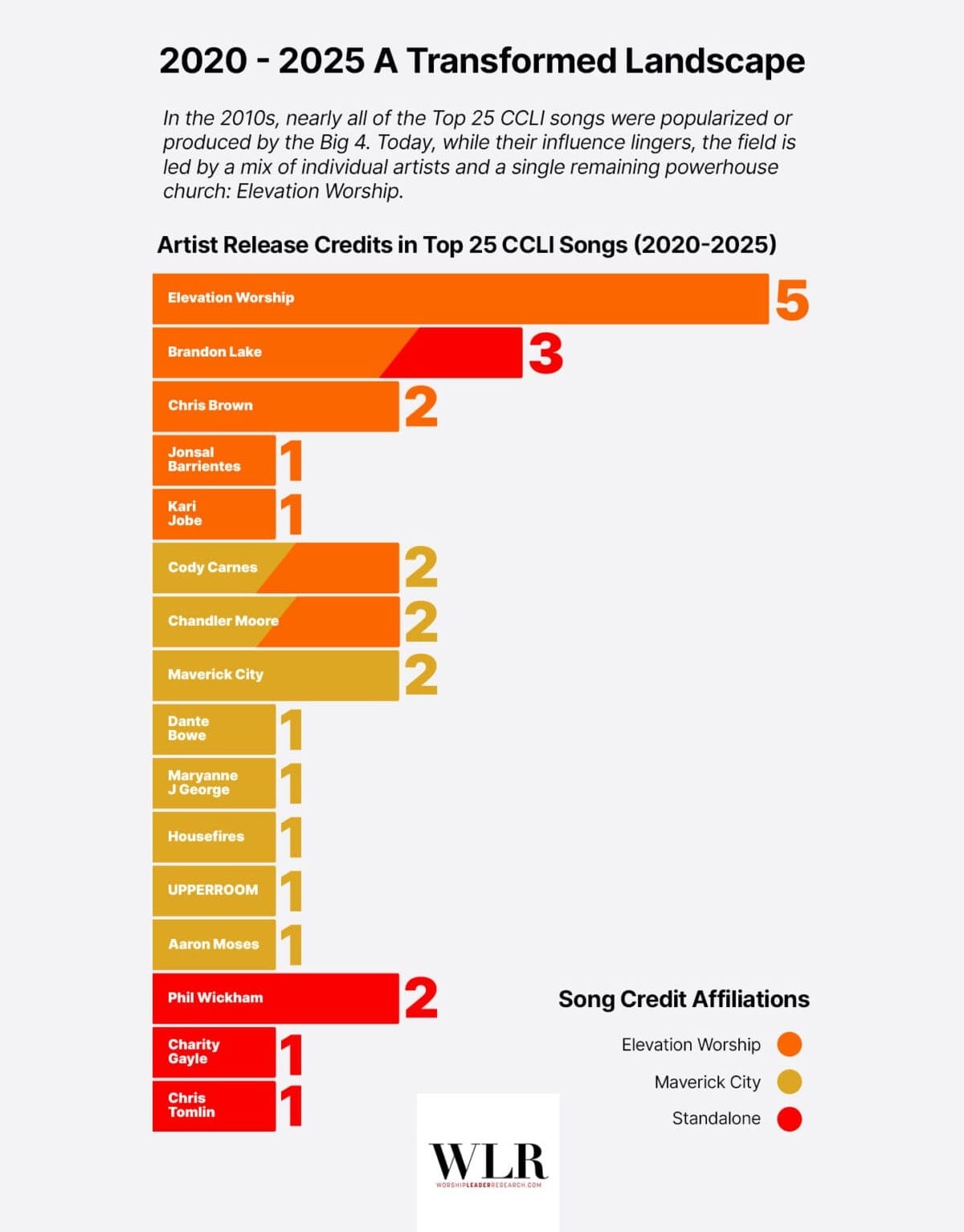
Music isn’t the root of the problem. The church itself has become the giant: the evangelical industrial complex. Labels and publishers can only succeed when they stay in lockstep with what the church is doing. Specifically, the trendsetter churches: the lighthouse and beachhead megachurches that shape the state of Christian culture. Every Sunday morning, in the thousands of churches they influence, you will find smoke machines and professional stage lighting, in-ear monitors and click tracks, and a world-class band rehearsed down to the second. Goliath is very good at Saturday nights too. The biggest worship acts now pack the same stadiums and arenas as pop stars. Front-row seats at worship concerts can cost over $1,000. One recent tour sold VIP experience packages that came with early entry, gifts, and catwalk photos.
Goliath was strong in the eyes of the world: size, armor, reputation, everything that impresses the crowd. Jesus said blessed are the poor in spirit. The worship industry lives by different beatitudes. Blessed are the rich in spirit. Blessed are the competent. Blessed are the marketing-savvy. Blessed are those with great branding. The Bible consistently paints a different picture: God’s power is most eloquently displayed in human weakness and fragility. The underdog early church understood and embraced this but it got lost somewhere along the way. The church didn't get defeated by the giant. The church became the giant.
Goliath has a sound and a subject. The market pays for what sells, and conscience doesn’t sell. The giant has learned that they can sell Black sound and faces on stage, as long as Black stories stay offstage. Congregations and audiences get the fire without feeling the heat. A song that names nothing and offends no one, can be sung anywhere and bring in the most revenue. The biggest library of worship songs, where worship leaders find what to sing, has over 23,000 songs tagged for praise and almost 10,000 for adoration. It has 556 tagged for sorrow, 387 for justice, and 38 for weeping, and those themes are often not central to those songs. Lament and grief, ubiquitous throughout the Bible, aren’t even in the list of categories. And good luck finding a song that addresses specific real world topics like racism, gun violence, or christian nationalism. Wonder sells. Speaking discomforting truths is not the way to the top of the charts.
Now think about us.
If you’ve heard our records, you might picture a building somewhere. A staff. A marketing team. Managers, agents, and road crews. Funding, investors, and connections. People often write to us as though we have a bank of customer service reps waiting to field their requests. If only we had any of those things. Since we started nine years ago, nearly everything apart from songwriting has been done by one person, in his spare time, without wages or compensation. Our production values might sound like they had a big budget. But it was all cobbled together perpetually on the edge of being broke, through scrappiness, ingenuity, sacrifice, and providence. The artists and musicians in our ecosystem are laboring out of passion and conviction, while doing whatever else they can to scrape by. Our fragility is not performative. We are holding on for dear life, in pursuit of our prophetic calling. Having done everything we’ve been able to do with no debt and no entanglements is both a miracle and conscious decision.
We know the path we chose. We write songs for consequence, not market appeal. Our songs get sung at a rally, at a funeral, at a vigil, in the moment a life breaks open. These songs are terrible investments by the industry’s math. They don’t stream on repeat at dinner parties. They don’t get licensed for Sunday services. We don’t get brand partnerships or invitations from megachurch influencers. Choosing this path means that the weapons and armor of the giant are inaccessible to us, but also do not burden or constrain us.
Next time in Part 2, we will open up our books to examine the actual costs of doing things this way.
P.S. Yes we do know how the rest of David’s story goes. The shepherd boy who refused Saul’s armor eventually took the crown, and turned that power towards lust and death. To quote The Dark Knight: “You either die a hero, or you live long enough to see yourself become the villain.” David was the best of us, but the gravity of empire is inexorable.
We are not being precious, cosplaying as the shepherd boy as a sly ploy to one day become king. Our highest aspiration is for stability and dignity so that our work can continue and thrive, without compromising our integrity. But then again, no one sets out expecting or intending to become the giant. So if you ever see us reaching for the armor, tell us.
Member discussion